Navigating the GSA Multiple Award Schedule (MAS): A 2026 Strategy Guide
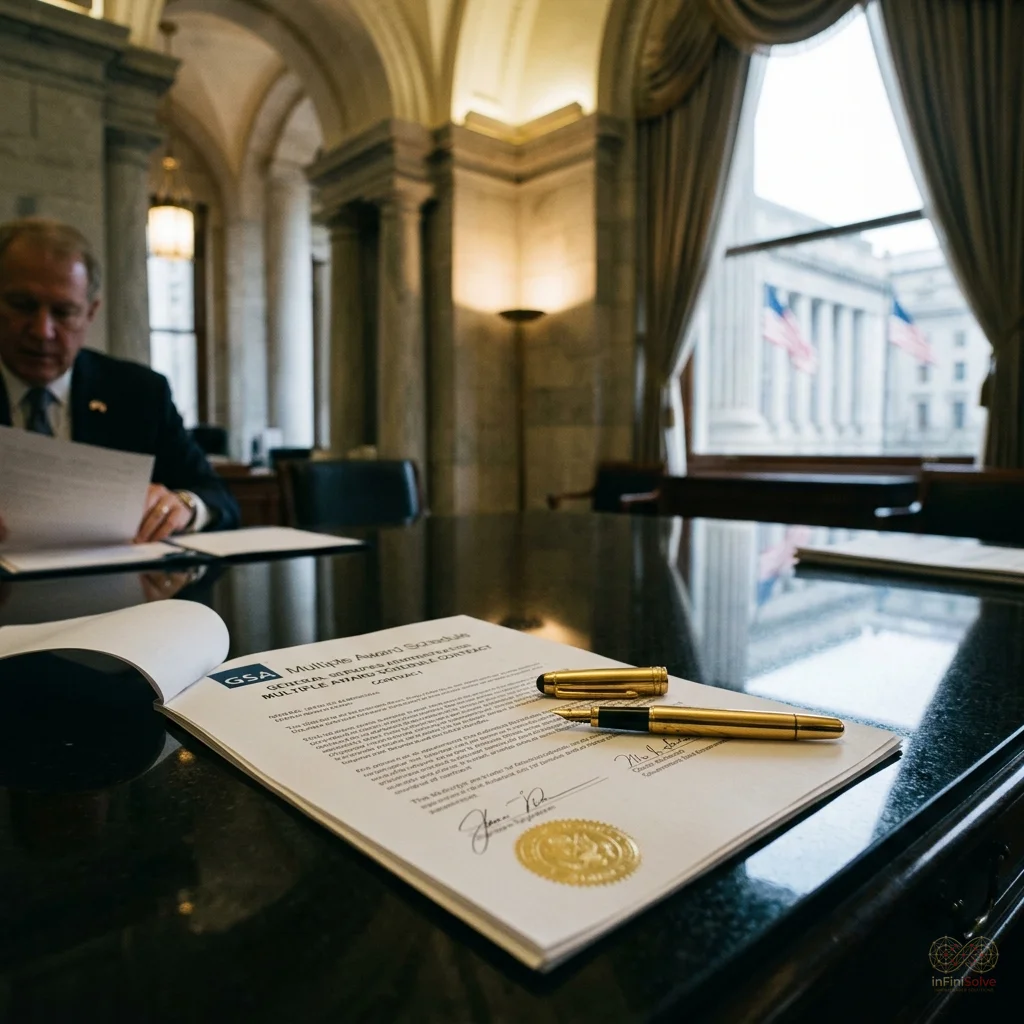
The General Services Administration (GSA) Multiple Award Schedule (MAS) is unquestionably the federal government's premier contracting vehicle. According to GSA's own reporting, the MAS program generates nearly $40 billion in annual sales, functioning as a massive, pre-vetted, highly streamlined marketplace for federal buyers across every single agency—from the Department of Defense to the Department of Veterans Affairs.
If your business sells commercial products or services, securing a GSA Schedule contract is often the single most important inflection point in your entire GovCon journey. It is the dividing line between endlessly struggling to find federal buyers through incredibly slow open-market solicitations on SAM.gov, and operating a highly scalable, repeatable federal revenue engine.
However, getting on the Schedule is only half the battle. In 2026, the federal marketplace is hyper-competitive. To actually succeed and generate revenue, you need a flawless initial proposal, a strategic pricing model that strictly protects your commercial margins for decades, and a highly proactive marketing strategy that puts your firm directly in front of the right Contracting Officers when they are ready to buy.
Table of Contents
What Is the GSA MAS Program?
The GSA MAS is a massive, indefinite-delivery/indefinite-quantity (IDIQ) government-wide contract vehicle. Under the MAS Consolidation initiative successfully completed in 2020, GSA merged all 24 of its legacy, siloed schedules (like Schedule 70 for IT) into a single, unified MAS structure organized intelligently by Large Categories and Special Item Numbers (SINs). You can explore the full massive catalog of vendors on the GSA eLibrary.
By awarding you a MAS contract, the GSA has essentially pre-negotiated your pricing, commercial terms, and regulatory conditions on behalf of the entire federal government. When an agency wants to purchase your IT services, professional consulting, or industrial products, they do not have to publish a complex, full-and-open public solicitation under FAR Part 15. Instead, they can issue a highly streamlined Request for Quote (RFQ) exclusively to GSA Schedule holders under FAR Subpart 8.4—dramatically reducing procurement lead times from 12 months down to just 3 weeks.

For Contracting Officers, the GSA Schedule means incredible speed, vastly reduced administrative burden, and pre-vetted pricing. For contractors, it means drastically accelerated sales cycles, exclusive access to billions of dollars in set-aside task orders, and a very powerful signal of federal legitimacy.
Phase 1: The GSA Proposal Process
Getting on the GSA Schedule is not a simple online registration. It requires submitting a highly comprehensive offer to GSA that undergoes a grueling, detailed review by a GSA Contracting Officer. This process is best understood as a rigorous audit of your commercial business practices, your financial health, and your technical capabilities.
To qualify for an award, you must demonstrably prove competency across several critical dimensions:
- Financial Stability: GSA will request and meticulously review your corporate financial statements (typically two years of audited or reviewed financials). They need absolute confidence that you are a solvent, viable long-term partner who will not go bankrupt mid-contract. A Dun & Bradstreet report linked to your SAM.gov registration is a core part of this assessment.
- Relevant Past Performance: You must provide documented evidence—typically three to five commercial or government contracts—proving that you have successfully delivered the specific products or services you are proposing to sell through the Schedule. Generic references are insufficient; the past performance must map perfectly to the SINs you are requesting.
- Commercial Sales Practice (CSP) Disclosure: This is the most complex and consequential element of the entire proposal. Under GSAR 552.212-4, you must fully, transparently disclose your commercial pricing history, including the absolute deepest discounts you extend to your best commercial customers (your Most Favored Customer, or MFC). The government expects pricing that is equal to or better than your best commercial rate.
- Technical Proposal: Depending on your specific Large Category, you may need to submit a highly detailed technical narrative describing your corporate experience, quality control ISO processes, and the specific personnel qualifications of your management team.
The proposal process typically spans 4 to 12 months, culminating in a formal, high-stakes negotiation session where the GSA Contracting Officer will aggressively challenge your proposed pricing and terms. Preparation and patience are absolutely essential.
Phase 2: Strategic Pricing and Compliance
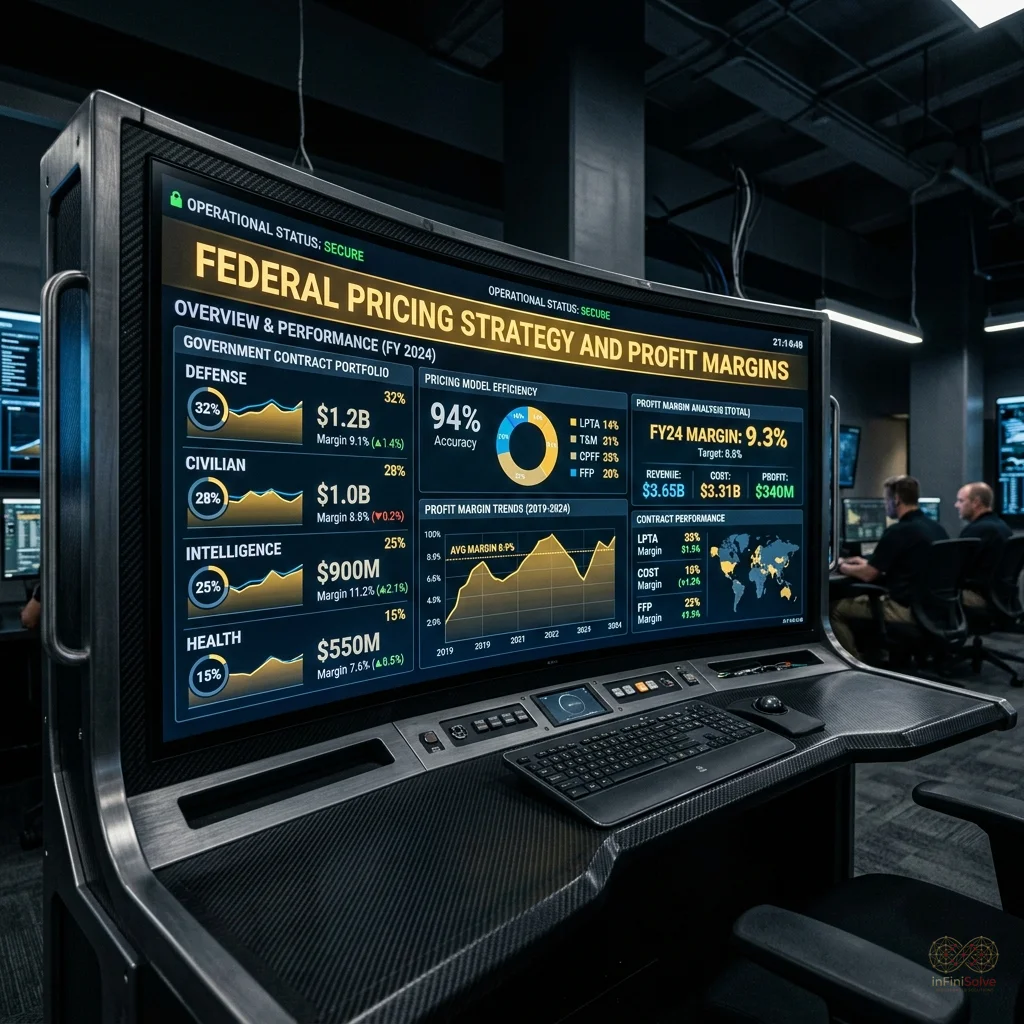
Your GSA pricing strategy is not a short-term tactical decision to win a single bid. A MAS contract has a 20-year maximum ceiling (a base period of 5 years with three consecutive 5-year options). The pricing model you establish at the initial award will forcefully govern your federal profitability for potentially two entire decades.
The Price Reduction Clause (PRC) — A Compliance Minefield: If you operate under the traditional Commercial Sales Practice (CSP) disclosure model, you are strictly bound by the Price Reduction Clause under GSAR 552.238-81. This terrifying clause stipulates that if you lower your commercial price to your Basis of Award (BOA) customer below what the government is paying, you must simultaneously reduce your GSA price by the exact same percentage. This creates a highly dangerous, rigid linkage between your commercial sales activity and your federal pricing.
If your commercial sales team goes rogue and starts offering ad-hoc discounts, promotional pricing, or massive volume-based concessions to win commercial deals at the end of a quarter, each of those discounts could trigger a cascading legal obligation to reduce your GSA prices. Violations of the PRC can result in immediate contract termination, massive financial penalties, and potential False Claims Act liability.
Transactional Data Reporting (TDR) — The Modern Alternative: Recognizing the intense complexity and compliance risk of the traditional PRC model, GSA now offers Transactional Data Reporting (TDR) as a modern alternative. Under TDR, you are entirely exempt from the Price Reduction Clause and MFC tracking. In exchange for this freedom, you must accurately report the specific price, quantity, and agency for every single transaction you execute under your Schedule contract every month.
For agile, modern companies with dynamic, market-responsive commercial pricing models, TDR is a massive, transformative advantage. It completely decouples your commercial pricing strategy from your federal pricing strategy, giving you far greater flexibility to aggressively compete in both markets simultaneously. Most new Schedule holders should strongly consider opting into TDR at the exact time of award.

Phase 3: Marketing Your Schedule on eBuy
A GSA Schedule is a hunting license, not a guaranteed revenue stream. One of the most common and financially devastating mistakes new Schedule holders make is assuming that federal orders will simply magically materialize once their contract is awarded. They absolutely will not. You must actively, relentlessly market your Schedule to generate sales.
Once you hold a GSA Schedule contract, you gain exclusive access to GSA eBuy — a highly secure, electronic Request for Quote (RFQ) platform that is completely invisible to the general public. Federal agencies post billions of dollars in highly lucrative task order opportunities on eBuy annually, and only verified GSA Schedule holders can view and respond to them. This is one of the most powerful competitive advantages of holding a Schedule contract.
To truly dominate eBuy and drive meaningful federal revenue, you must execute the following strategies:
- Optimize Your GSA Advantage! Listing: Your Schedule catalog on GSA Advantage! is your digital federal storefront. Ensure it includes high-quality product images, highly clear service descriptions packed with relevant keywords, and strictly accurate pricing. Contracting Officers use keyword searches on GSA Advantage! to find vendors, so treat your listing exactly like a search-engine-optimized Amazon product page.
- Target Specific Agencies and Program Offices: Do not market to "the government" as a massive monolithic entity. It doesn't work. Research the specific agencies, bureaus, and program offices that purchase your exact products and services. Use the Federal Procurement Data System (FPDS) to surgically analyze historical spending patterns by NAICS code and identify the top-spending agencies for your specific offerings.
- Leverage Contractor Teaming Arrangements (CTAs): Under GSAR 552.238-82, you can legally partner with other GSA Schedule holders to submit joint responses to massive, multi-disciplinary task orders that neither company could possibly win independently. This is an exceptionally powerful tool for small businesses seeking to compete for enterprise-scale federal work.
The Strategic Value of the Schedule

Frequently Asked Questions (FAQ)
Q: What is the GSA Industrial Funding Fee (IFF)? A: The IFF is a 0.75% fee that GSA contractors must pay on all sales generated through their GSA MAS contract. This fee is built into the contractor's GSA contract pricing and is paid quarterly to the GSA.
Q: Do I need a GSA Schedule to do business with the federal government? A: No, it is not legally required. You can bid on open-market contracts via SAM.gov without one. However, holding a GSA Schedule makes it exponentially faster and easier for the government to buy from you, giving you a massive competitive advantage.
Q: Can I use commercial past performance for my GSA proposal? A: Yes, absolutely. If you are a new federal contractor, GSA fully accepts relevant commercial past performance to prove your technical competency for the Schedule.
Q: What is a Special Item Number (SIN)? A: A SIN is a categorization method used by GSA to group similar products, services, and solutions together. When you apply for a Schedule, you apply for specific SINs that match your offerings (e.g., SIN 54151S for IT Professional Services).
Q: Can a small business partner with a large business on a GSA CTA? A: Yes. GSA Contractor Teaming Arrangements (CTAs) allow large and small businesses to team up, and unlike standard Prime/Sub relationships, all CTA members maintain direct privity of contract with the government.
Related InfiniSolve Insights
Continue building your federal contracting strategy with these in-depth guides: - LPTA vs. Best Value Tradeoff: Strategic Pricing for Government Contracts - DCAA Compliance 101: Preparing Your Accounting System for Cost-Reimbursement Contracts - B2B GovCon Outreach Strategy: Scaling Beyond SAM.gov
Ready to dominate your sector?
Partner with InfiniSolve to architect a digital footprint that wins contracts and captures market share.
Schedule Strategy Session