Government IT Modernization Best Practices: Legacy System Migration

The federal government operates some of the oldest, most complex, and highly classified legacy IT systems on the entire planet. From decades-old COBOL mainframes managing critical financial infrastructure at the IRS, to fragile on-premise servers housing vast amounts of citizen data at the VA, the technological debt of the U.S. government is staggering.
The mandate to modernize these systems is no longer theoretical or optional. Driven by sweeping executive orders, the Federal Information Technology Acquisition Reform Act (FITARA), and escalating geopolitical cyber threats targeting the defense industrial base, federal agencies are being forced to aggressively overhaul their digital infrastructure.
For government contractors specializing in IT services, systems integration, and cybersecurity, this represents a generational, multi-billion dollar opportunity. However, migrating a federal agency is not the same as migrating a commercial enterprise. The intense regulatory friction, strict compliance mandates, and absolute zero-downtime requirements make federal IT modernization uniquely unforgiving.
In this comprehensive guide, we dissect the best practices for executing federal IT modernization, navigating the complex FedRAMP authorization process, and engineering zero-trust architectures that consistently win federal contracts in 2026.
Table of Contents
- 01.The Core Drivers of Federal IT Modernization
- 02.Best Practice 1: The "Strangler Fig" Migration Pattern
- 03.Best Practice 2: Navigating FedRAMP Compliance
- 04.Best Practice 3: Implementing Zero Trust Architecture (ZTA)
- 05.Best Practice 4: Human-Centered Design (HCD)
- 06.Conclusion: Engineering the Future of Government
- 07.Frequently Asked Questions (FAQ)
- 08.Related InfiniSolve Insights
The Core Drivers of Federal IT Modernization
To successfully bid on and execute massive IT modernization contracts, you must fundamentally understand the underlying legislative and operational pressures driving an agency's procurement strategy. Agencies do not modernize for fun; they modernize because they are forced to.
- Cybersecurity Mandates (Zero Trust): Under Executive Order 14028, all federal civilian agencies are mandated to transition to a Zero Trust Architecture (ZTA). Legacy systems, built on outdated perimeter-defense "castle and moat" models, physically cannot support granular, identity-based zero-trust protocols. They must be completely replaced.
- The Cloud Smart Strategy: Agencies are required by the OMB to evaluate secure, scalable cloud computing options before investing any taxpayer dollars in new on-premise hardware.
- The IT Working Capital Fund (MGT Act): The Modernizing Government Technology (MGT) Act allows agencies to establish working capital funds specifically to finance modernization projects and retire wildly expensive legacy systems.
- Talent Attrition: The federal workforce that understands legacy programming languages (like COBOL and Fortran) is rapidly retiring. Agencies are migrating to modern, open-source stacks simply because they can no longer hire anyone to maintain their old mainframes.
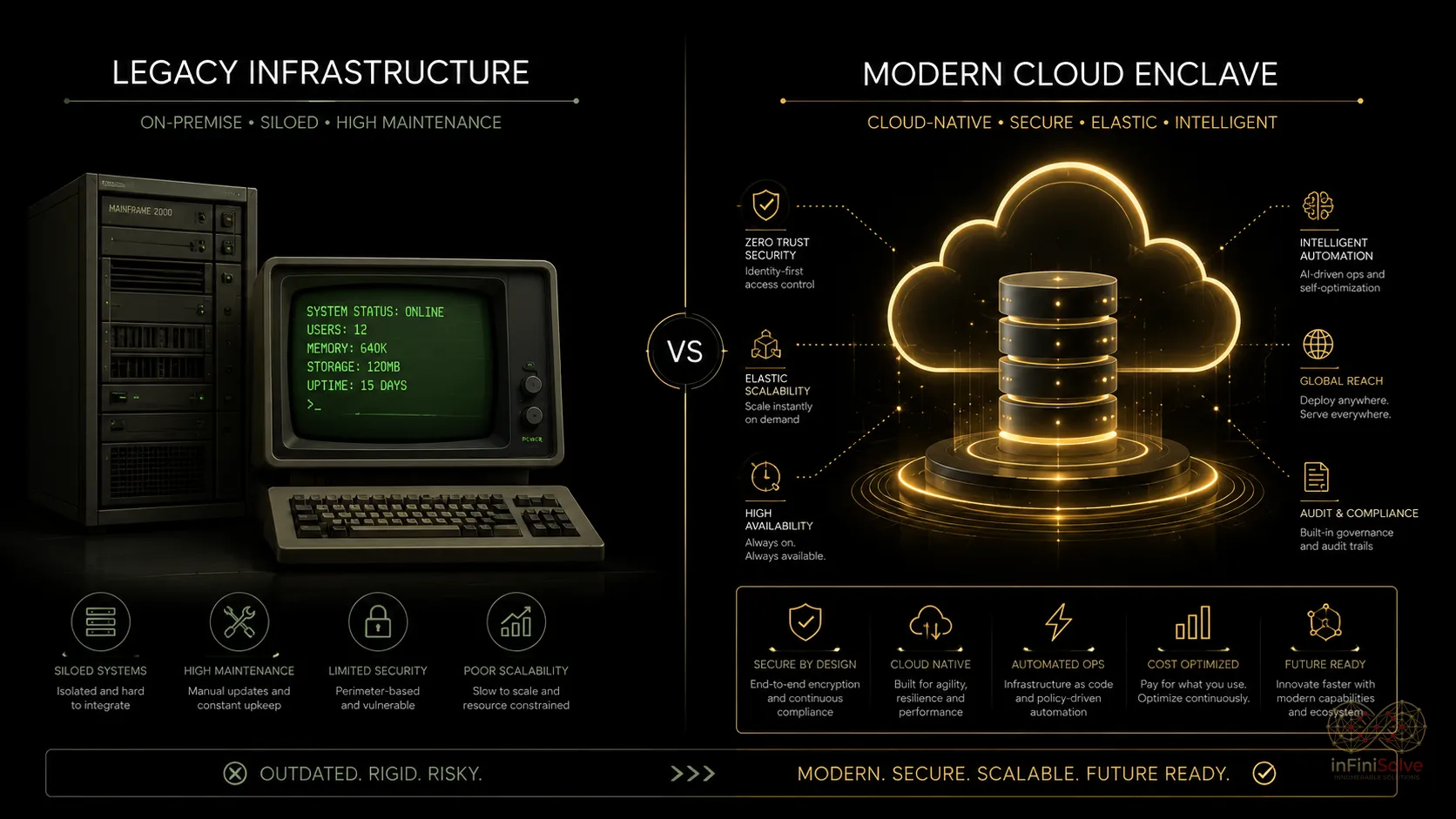
Best Practice 1: The "Strangler Fig" Migration Pattern
The most common and fatal mistake contractors make when proposing a modernization strategy is advocating for a massive, high-risk "rip and replace" operation. Federal agencies are deeply, structurally risk-averse. A complete system overhaul that requires shutting down a mission-critical database for 48 hours is politically and operationally unacceptable.
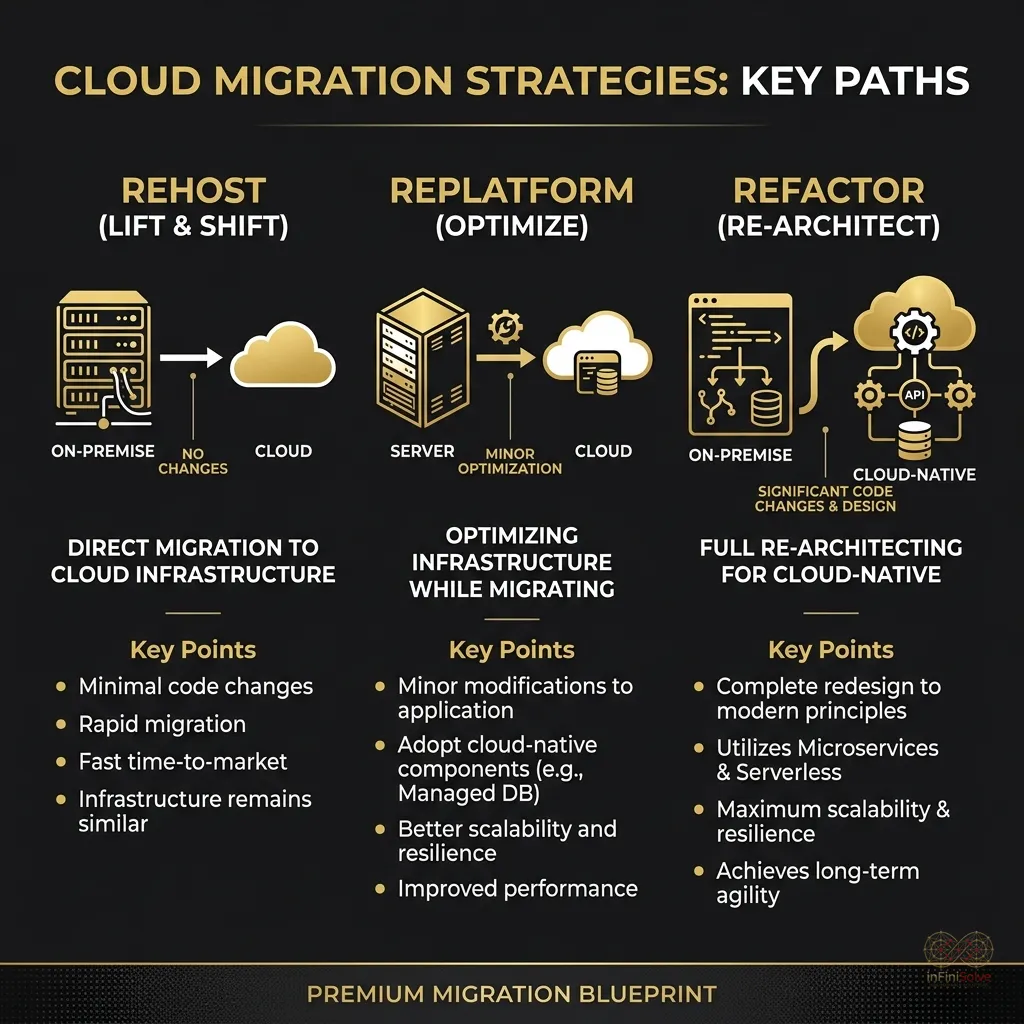
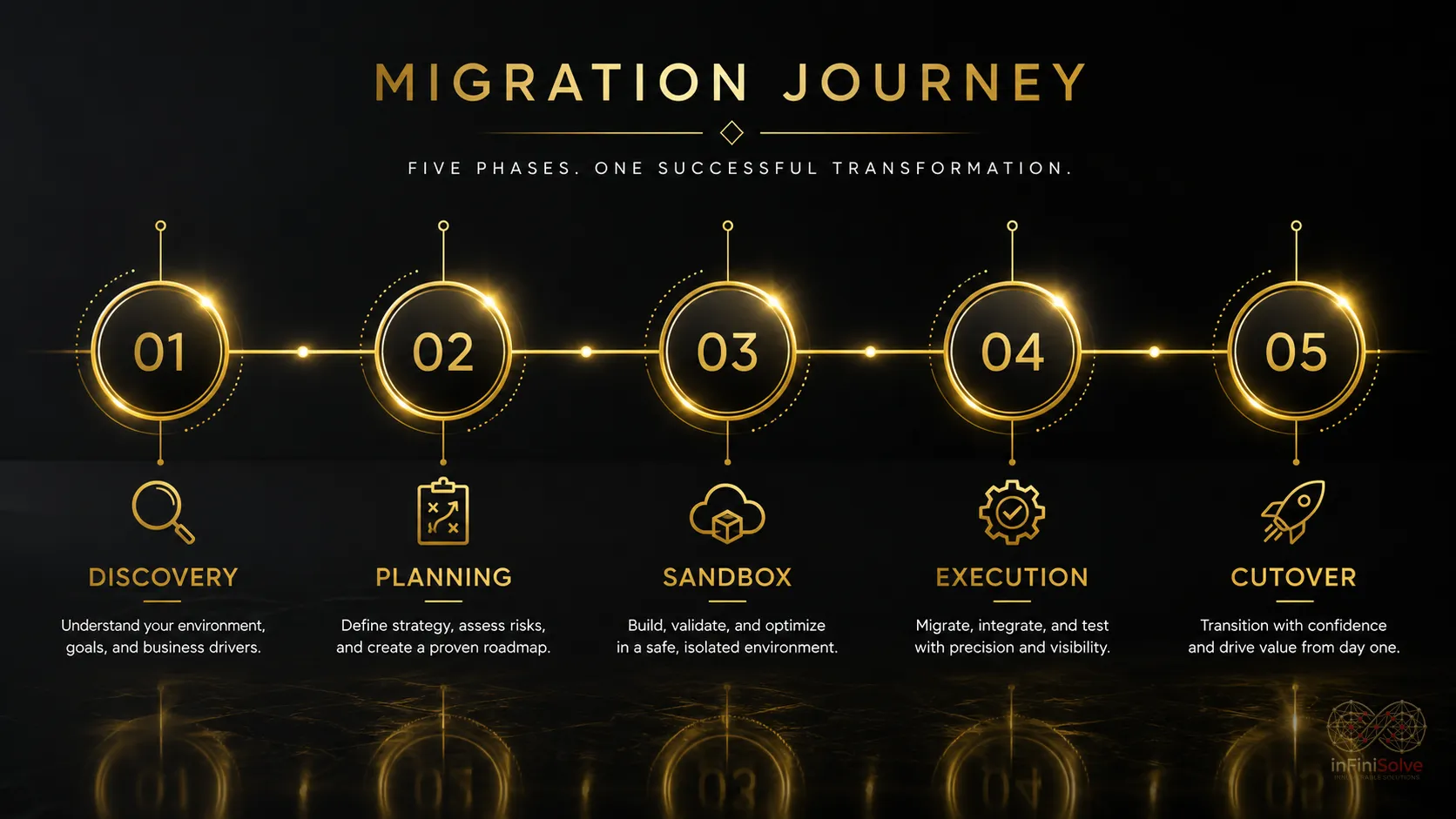
Winning proposals leverage the "Strangler Fig" pattern. Instead of replacing the legacy system all at once, the contractor incrementally builds modern microservices around the edges of the old system.
- API Abstraction: First, build robust API layers over the legacy system so new applications can interact with the old data securely without altering the core database.
- Incremental Migration: Slowly migrate specific, low-risk functionalities to a modern cloud environment (like AWS GovCloud or Azure Government).
- Decommissioning: As the modern microservices gradually take over, the legacy system is slowly "strangled" until it handles zero traffic, at which point it is safely and quietly decommissioned.
This agile, phased approach drastically reduces the risk of catastrophic failure, ensures zero downtime, and demonstrates to the Technical Evaluators that your firm deeply understands federal risk tolerance.
Best Practice 2: Navigating FedRAMP Compliance
If your modernization strategy involves moving federal data to the cloud, you must expertly navigate the Federal Risk and Authorization Management Program (FedRAMP).
FedRAMP provides a standardized, rigorous approach to security assessment, authorization, and continuous monitoring for cloud products and services. You cannot simply spin up a standard commercial AWS instance and move federal citizen data into it.
The FedRAMP Impact Levels: - Low Impact: For data intended for public use (e.g., an agency's public-facing informational website). Loss of confidentiality would have a limited adverse effect on operations. - Moderate Impact: Accounts for nearly 80% of all FedRAMP authorizations. This includes data where a breach would result in serious adverse effects on agency operations or individuals (e.g., PII or standard financial data). - High Impact: For the government's most sensitive, unclassified data (like law enforcement data or critical infrastructure systems). A breach would result in catastrophic or ruinous effects on operations. This requires migration to highly restricted environments like AWS GovCloud or Azure Government, which meet stringent NIST SP 800-53 High baseline controls.
When writing your proposal, you must explicitly detail your methodology for ensuring that all integrated Cloud Service Providers (CSPs) maintain their FedRAMP authorization, and how you will handle continuous monitoring post-migration.
Best Practice 3: Implementing Zero Trust Architecture (ZTA)
You cannot discuss federal IT modernization in 2026 without placing Zero Trust at the absolute, non-negotiable center of your architecture. As outlined by the Cybersecurity and Infrastructure Security Agency (CISA), Zero Trust assumes that the network is already compromised.
A compliant federal modernization effort must integrate the five pillars of the CISA Zero Trust Maturity Model:
- Identity: Strict, continuous verification of all users, heavily relying on advanced Multi-Factor Authentication (MFA) and Phishing-Resistant credentials (like FIDO2 keys or PIV/CAC cards).
- Devices: Continuous health and compliance checks for every endpoint attempting to access federal data.
- Networks: Micro-segmentation and end-to-end encryption of all traffic, both external and internal.
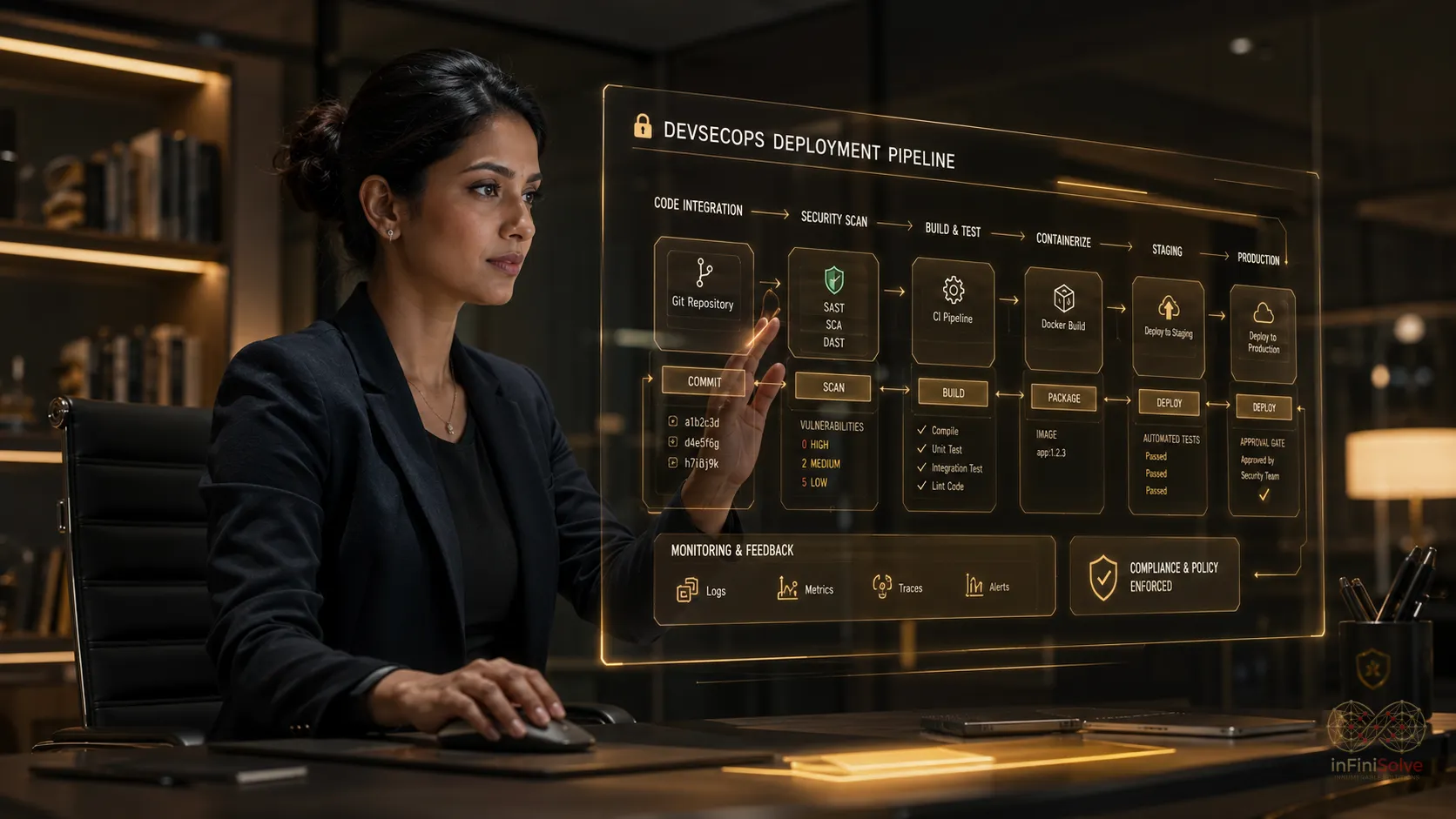
- Applications and Workloads: Securing the application layer through continuous vulnerability scanning and rigorous DevSecOps pipelines.
- Data: Granular data classification, tagging, and automated Data Loss Prevention (DLP) protocols.
If your technical volume treats cybersecurity as an afterthought or a "Phase 2" implementation, you will unequivocally lose the contract. Security must be engineered into the CI/CD pipeline from Day 1. (For compliance requirements affecting defense subcontractors specifically, see our guide on CMMC Level 2 Compliance).
Best Practice 4: Human-Centered Design (HCD)
Historically, federal IT systems were notoriously hostile to the end-user, prioritizing backend functionality over usability. Modern procurement explicitly rejects this. Contracts now require strict adherence to the U.S. Web Design System (USWDS) and the principles of Human-Centered Design (HCD).
If you are modernizing an internal portal used by thousands of federal employees, your proposal must highlight your UI/UX capabilities. You must demonstrate how your modernization effort will reduce cognitive load, improve workflow efficiency, and meet strict Section 508 accessibility compliance requirements for users with disabilities.
Agencies are increasingly using the Digital IT Acquisition Professional (DITAP) framework to evaluate vendors. They want to see detailed user personas, journey mapping, and agile feedback loops integrated directly into your software development lifecycle.
Conclusion: Engineering the Future of Government
The era of monolithic, on-premise federal data centers is rapidly ending. The agencies that successfully transition to agile, zero-trust cloud architectures will be the ones that can effectively execute their missions in an increasingly hostile cyber landscape.
For GovCon IT firms, the blueprint for success is clear: propose low-risk, incremental migrations, intimately understand FedRAMP and NIST compliance frameworks, and place zero-trust security at the foundation of every technical decision. Contractors who master these best practices will secure long-term, highly lucrative modernization contracts for the next decade.
Frequently Asked Questions (FAQ)
Q: What is the primary difference between FedRAMP and NIST SP 800-53? A: FedRAMP is a cloud-specific compliance framework built upon the security controls of NIST SP 800-53. While NIST 800-53 provides the baseline controls for all federal information systems, FedRAMP adapts and expands these controls specifically for SaaS, PaaS, and IaaS cloud products.
Q: Can we use commercial cloud environments for federal data? A: Generally, no. While some non-sensitive data can reside in FedRAMP Moderate commercial clouds, any sensitive data or CUI must reside in FedRAMP High government clouds (like AWS GovCloud) which ensure data residency strictly on U.S. soil.
Q: What is the MGT Act? A: The Modernizing Government Technology (MGT) Act is legislation that allows federal agencies to create working capital funds, allowing them to reinvest savings from retiring legacy systems into new cloud technologies.
Q: How does Zero Trust differ from traditional security? A: Traditional security focused on defending the network perimeter (like a castle wall). Once inside, a user was trusted. Zero Trust assumes the perimeter is already breached and requires continuous verification for every single action and data request, regardless of where the user is located.
Q: Do IT modernization proposals require Section 508 compliance? A: Yes, absolutely. Section 508 of the Rehabilitation Act requires federal agencies to make their electronic and information technology accessible to people with disabilities. Any modernized system must be fully compliant from launch.
Related InfiniSolve Insights
To further enhance your federal contracting strategy, explore these highly authoritative resources from the InfiniSolve knowledge base: - Zero Trust Architecture: A Practical Implementation Guide for DoD Subcontractors - CMMC Level 2 Compliance for Small Businesses: The Definitive Guide - The Buy American Act & Domestic Sourcing: A Guide for 2026 GovCon Compliance
Ready to dominate your sector?
Partner with InfiniSolve to architect a digital footprint that wins contracts and captures market share.
Schedule Strategy Session